Table Of Content

Instead, they prey on smaller spiders and other insects like ants and crickets. Rabid wolf spider bites can also cause some swelling and itchiness, but these are usually short-lived and only occur due to the bite and not from venom. Most species of wolf spider are considered to have stable populations, although the exact populations are not known. Despite this, some of the species located on small islands such as Desertas and Saint Helena are critically endangered, according the IUCN Red List. Two wolf spider species are known to be predators of cane toads. Lycosa lapidosa will take small toads and frogs while Lycosa obscuroides has been noted biting and killing a large toad within one hour.
How To Get Rid of Wolf Spiders
The best preventive step you can take to ensure wolf spiders don’t enter your home is to ensure that your home is properly sealed. This means sealing any cracks and crevices on your home’s foundation and ensuring that your windows and doors fit snugly when closed. Wolf spiders mainly eat ground-dwelling insects and other spiders. They tend to hunt at night, either leaving their burrow or hiding place and stalking their prey or lying in wait and pouncing when an unsuspecting insect walks by. Some wolf spiders can take on insects larger than they are, and even small amphibians. Wolf spiders often scurry under gaps below doors, and jumping spiders accidentally may be carried in on people.
How to Deal with Wolf Spiders
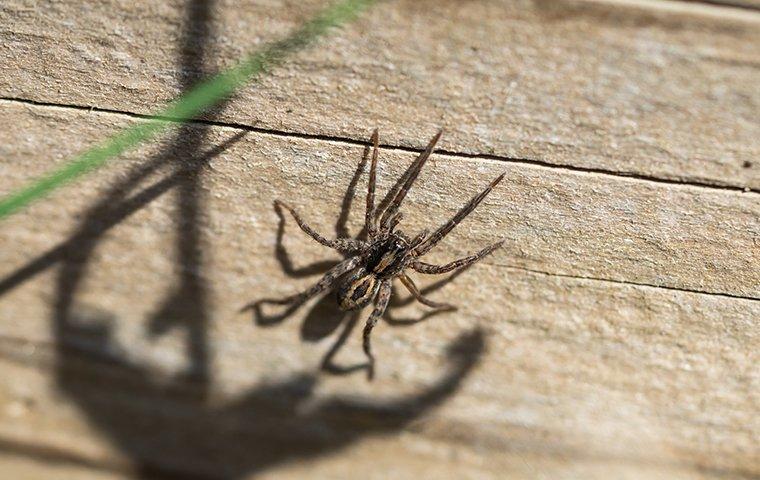
Some favor outdoor areas, like garden beds, while others like sneaking their way into homes. Known as the sprinters of the spider world, wolf spiders can move very fast when catching prey. While they depend on their good eyesight to hunt, their sense of touch is also acute. Despite having a venomous bite, the wolf spider is shy and is most likely to run away when disturbed. If you see wolf spiders outside, it’s best to leave them alone. If you’re uncomfortable seeing them indoors, a pest control expert can spray the exterior of your house to discourage them and inspect for likely means of entry.
Household Pests: Rabid Wolf Spiders
You might not see them, but they’re all around you — and that’s a good thing. Your garden spiders, and learn how to entice more into your yard. All identification and information on USAspiders.com are free - of course. If you would like to support us, we appreciate donations through Paypal here.
Creepy Crawlers: It's Camel Cricket & Wolf Spider Season In NJ - catcountry1073.com
Creepy Crawlers: It's Camel Cricket & Wolf Spider Season In NJ.
Posted: Mon, 07 Nov 2022 08:00:00 GMT [source]
Misunderstood Wolf Spider Found in Kennebunk Will Give You Chills - 92moose.fm
Misunderstood Wolf Spider Found in Kennebunk Will Give You Chills.
Posted: Tue, 12 Apr 2022 07:00:00 GMT [source]
They can release pheromones and receive communication through vibration in their webs. They typically live on the ground, though some are known to climb partly up trees to catch their prey. The dark, mottled colors on their bodies help them blend in with decaying plant matter while hunting or avoiding predators. Sometimes they dig burrows or make holes under rocks or logs to live in. So there are some tips on how to get rid of wolf spiders in the house. All these methods should work “but” if there are too many for you to deal with then you should contact a spider removal expert.
Twice in the past I asked an entomologist (both times were different entomologists) to help me identify the different Wolf Spiders that have been sent to me. It is simply too hard to identify the different species of Wolf Spiders without putting the spider under the microscope to look at the genitalia. Ask Extension is a way for you to get answers from the Oregon State University Extension Service. We have experts in family and health, community development, food and agriculture, coastal issues, forestry, programs for young people, and gardening.
Once the babies hatch, they will continue to ride around on the mother’s back until they are large enough to fend for themselves. Wolf spider habitats range from woodlands and dry, inland shrub lands to wet, coastal forests and alpine meadows. Some wolf spider species prefer to dwell in suburban gardens. Coastal sand dunes, mountain herb fields or riverbank gravel beds are also home to many wolf spider species. Because wolf spiderlings travel great distances, the habitat of a single species can span a large region. Because of their large size, wolf spiders intimidate people and could be a nuisance in large numbers but they do eat insects so are often considered beneficial.
What Do Wolf Spiders Look Like?
It’s best to wear gloves when removing their webs as you don’t want it sticking to your hands. If there are any eggs inside the web then make sure to put them in an air-tight bag to throw them out otherwise, they will hatch and you’ll be back to square one. If you see them inside your house, put down glue traps to catch them. They don’t generally breed indoors, so if you see one in your basement, it doesn’t necessarily mean you have an infestation. Hemolymph is pumped through the heart and bathes the internal organs and tissues.
Many people would assume that rabid wolf spiders bite, but it’s not that black and white. Despite their size, scary qualities, aggressive behavior, and name, rabid wolf spiders don’t go out of their way to bite humans. Rabid wolf spiders generally only bite when backed into a corner and feel threatened. Wolf spiders are a common household pest in the fall when they are looking for a warm place to overwinter.
Mothers are known to exhibit aggressive behavior when carrying their egg sacs. Granular insecticides are available in most stores and can be used to get rid of wolf spiders in the house. They can be used both indoors and outdoors and will usually kill spiders within 24 hours. Wolf spiders are generally large and fast creatures that ambush and chase down their prey rather than build a web to catch them. They belong to a family of spiders called Lycosidae; Lycos means “wolf” in Greek.
Because these spiders are solitary creatures, they generally are spotted alone, and killing off individual spiders can be a tedious and daunting task. Wolf spiders live in many regions of the United States and are typically concentrated in Missouri, Texas, and California. They are commonly found in open areas such as grasslands and meadows where there are plenty of insects to feed on. They can also harbor in firewood, ground tunnels; or under leaf piles and other ground clutter. Wolf spiders are not aggressive and will not bite unless frightened or provoked. Although the wolf spider's bite is not deadly, it can be very painful.
There are more than 100 genera and about 2,300 species of wolf spiders; 200 species live in the United States. This family belongs to the order of Araneae, which includes all known spiders. One of the easiest ways to get rid of wolf spiders is to vacuum them up. You can do this with a handheld vacuum or an attachment on your regular vacuum cleaner. You should spray the insecticide all over their nest and around the areas where you’ve seen the wolf spiders.


No comments:
Post a Comment